How to Choose Rimless Glasses: Lenses, Screws, and Face Shape Guide
Rimless glasses are known for their lightweight feel and clean, minimalist look. Without a full frame around the lenses, they put more focus on your natural facial features and create a subtle, refined appearance.
At the same time, rimless eyewear requires more careful selection than full-frame styles. Because the lenses themselves support the bridge and temples, the right lens material, prescription range, mounting system, and fit all matter. If you are exploring lightweight everyday eyewear, you can also browse our rimless glasses collection to compare different shapes and styles.
1. Best Lens Materials for Rimless Glasses
In rimless glasses, the bridge and temples are attached directly to the lenses through drilled holes. That means not all lens materials are suitable for this type of frame.
Trivex lenses
Trivex is one of the best choices for rimless glasses. It is lightweight, impact-resistant, and less likely to crack around drill points. It also offers strong optical clarity, which makes it a premium option for everyday wear.
Polycarbonate lenses
Polycarbonate is another reliable option for rimless frames. It is durable, lightweight, and more budget-friendly than Trivex. While its clarity is slightly lower, it is still a practical and popular choice for drill-mount eyewear.
Lens materials to avoid
Standard plastic lenses such as CR-39, as well as glass lenses, are generally less suitable for rimless designs because they are more likely to crack or break during drilling or daily wear.
2. What Prescription Works Best for Rimless Glasses?
Prescription strength has a major impact on how rimless glasses look and perform. Since there is no frame to hide thick lens edges or provide extra support, some prescriptions work better than others.
Low to moderate prescriptions
If your spherical prescription is around 0.00 to +/-4.00, rimless glasses are usually a very good option. In this range, lenses typically remain relatively thin, light, and balanced in appearance.
Higher myopia
For prescriptions above -6.00, rimless glasses may be less ideal because minus lenses tend to be thicker at the edges. Without a surrounding frame, this edge thickness becomes more visible and can add weight. If you still prefer a rimless style, high-index lenses such as 1.67 or 1.74 and a narrower lens shape are usually the better approach.
Higher hyperopia
For prescriptions above +4.00, extra care is needed. Plus lenses are thicker in the center and thinner at the edges, and in some cases the lens edges may be too thin to support drill mounting as securely as needed.
Astigmatism
Mild to moderate astigmatism usually works well in rimless glasses. With higher cylinder values, however, lens thickness may become less even, which can affect both appearance and balance.
3. Rimless Hardware: Screws, Mountings, and Frame Materials
The hardware in rimless glasses plays an important role in durability. Since there is no full frame to absorb pressure, the bridge, temples, and mounting system all need to work together carefully.
Screws and bushings
Traditional rimless glasses often use small screws and nuts to attach the hardware to the lenses. This design is common and effective, but the screws may loosen over time and need occasional adjustment.
Some modern rimless glasses use compression-style mountings or bushings made from silicone or similar materials. These systems can reduce pressure on the drilled holes and may offer a more stable long-term fit.
Titanium temples and bridge
Titanium is one of the best materials for rimless eyewear hardware. It is lightweight, durable, flexible, and comfortable for long wear. Because it can handle everyday movement better than heavier materials, it can also help reduce stress around the lens mountings.
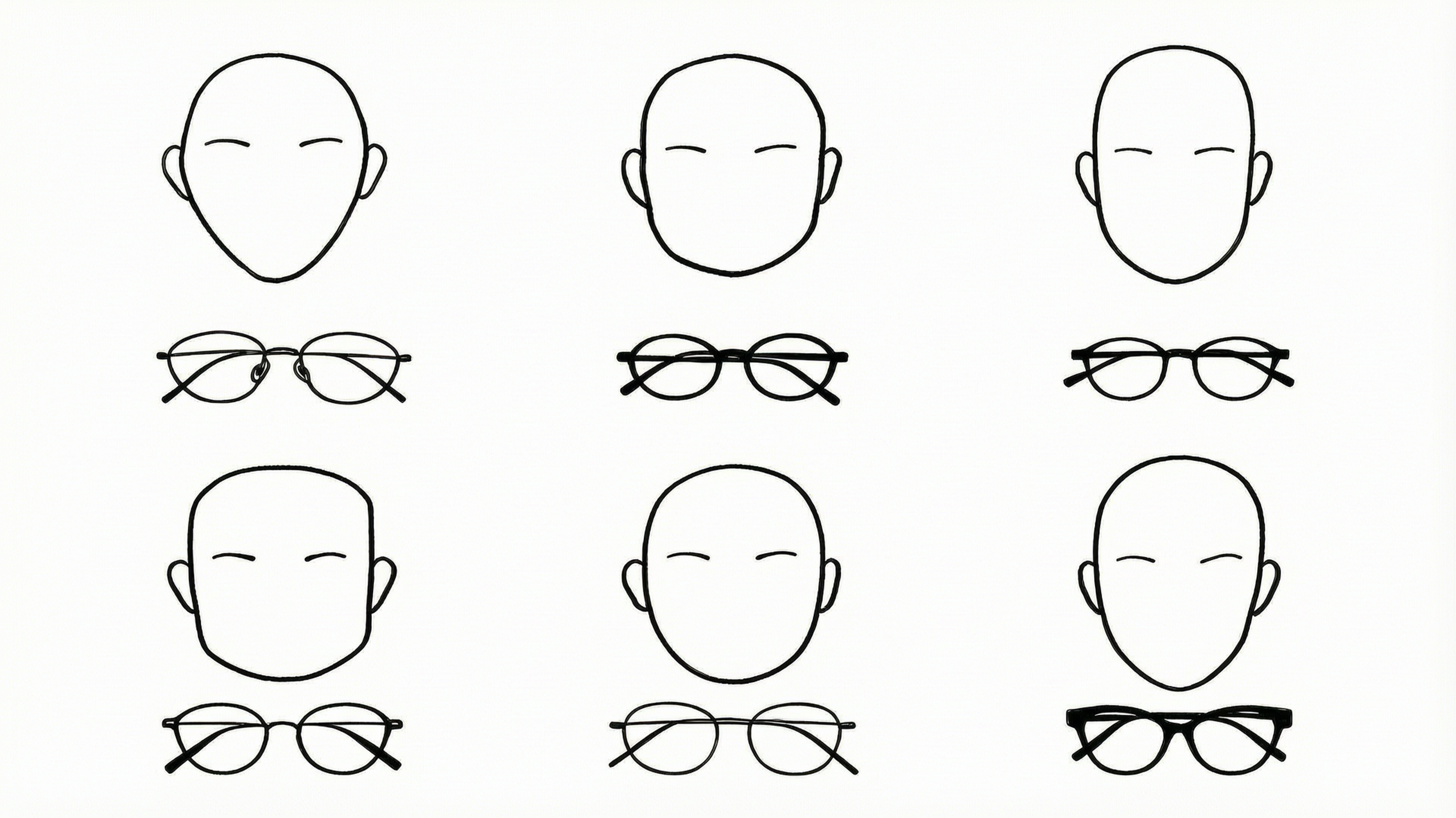
4. Best Rimless Glasses Shapes for Different Face Shapes
One of the advantages of rimless glasses is their versatility. Because there is no thick frame line around the lenses, the look is softer and easier to adapt to different face shapes.
Round face
Rectangular or square lenses can add more definition and contrast to softer facial contours.
Square face
Round or oval lenses can help soften stronger jawlines and more angular features.
Heart-shaped face
Oval or slightly wider lens shapes can help balance a broader forehead and a narrower chin.
Oval face
Oval faces are usually the most flexible. Most rimless lens shapes can work well, as long as the overall width is proportionate to the face.
5. Why Low Bridge Fit Matters for Rimless Glasses
Fit is just as important as style. If you have a lower nose bridge or higher cheekbones, look for rimless glasses with adjustable nose pads and extended pad arms. This type of low bridge fit, often called Asian fit, can help lift the lenses slightly higher, improve comfort, and keep the glasses from sliding or resting on the cheeks.
Conclusion
Rimless glasses can be an excellent choice if you want eyewear that feels light, looks refined, and stays visually understated. In most cases, the best results come from pairing rimless frames with durable lens materials such as Trivex or polycarbonate, choosing a prescription range that works well with exposed lens edges, and selecting high-quality hardware such as titanium components.
If you are ready to find a lightweight, minimalist pair for everyday wear, explore our rimless glasses collection to see more styles.