If your glasses lift when you smile, leave marks on your cheeks, or collect makeup along the lower rim, the issue is usually fit—not your face. The frame may sit too low, the lenses may be too tall, or the bridge may not provide enough support.
Why Glasses Touch the Cheeks
- The bridge sits too low on the nose.
- The frame has tall lenses or a deep lower rim.
- The nose pads do not create enough height.
- The frame angle brings the lower rim toward the face.
- The overall frame is too large or unstable.
Try the Smile Test
Put on the glasses in their natural position and smile normally. If your cheeks push the frame upward, the glasses need more clearance or a different bridge position. A small amount of movement can occur, but the frame should not lift substantially or press into the skin.
See our detailed smile test guide.
How to Improve Cheek Clearance
Choose Asian fit or low bridge fit
These frames are designed to address common problems such as slipping, eyelash contact, and cheek interference. The exact solution varies by frame, so always review the listed measurements and fit details.
Reduce lens height
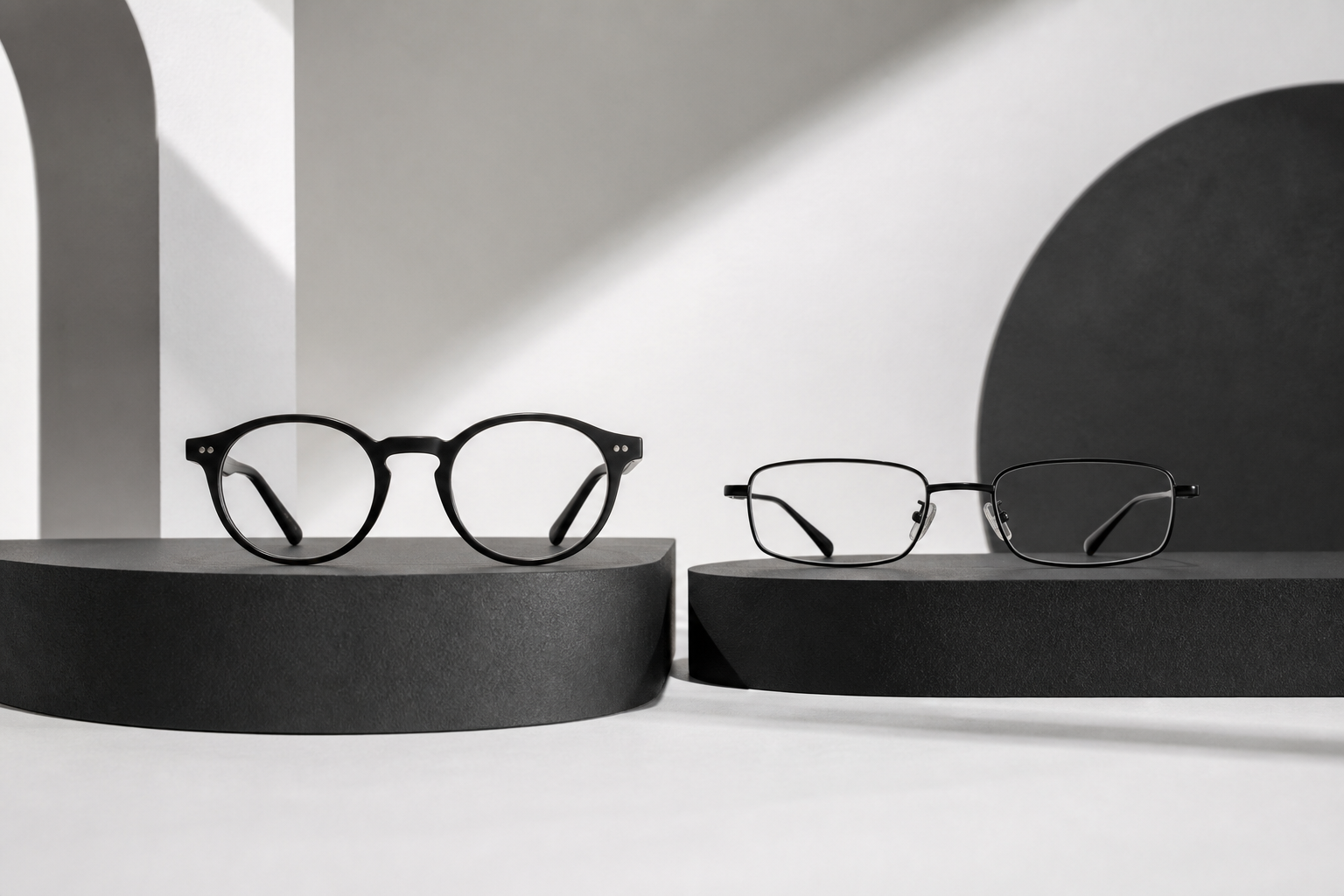
A shallower lens shape can create more space above the cheek. Narrow rectangles and compact ovals often provide less vertical depth than oversized rounds or squares.
Check the nose pads
Adjustable pads may help raise the frame and change its position. Pad width, angle, and contact area all matter; adjustment should remain comfortable and symmetrical.
Review frame angle
If the lower rim tilts toward the cheeks, a professional adjustment may improve the angle. Do not force acetate or delicate frames at home.
Choose the correct overall width
A frame that is too wide may slide forward, while a frame that is too narrow may sit incorrectly around the temples. Stable width helps preserve clearance.
What Not to Do
- Do not choose a frame only because it has a smaller bridge number.
- Do not bend the frame aggressively at home.
- Do not assume adhesive nose pads can permanently correct every fit issue.
- Do not ignore repeated pressure marks or discomfort.
Choosing a Better Frame Online
Compare total width, bridge design, lens height, and temple length with glasses you already own. If your current pair touches your cheeks, choose a frame with more supportive bridge geometry or a shallower lens shape.
Read our low nose bridge fit guide, then browse Asian fit eyeglasses.
FAQ
Should glasses ever touch the cheeks?
They should not press, leave persistent marks, or lift noticeably when you smile.
Will adjustable nose pads fix cheek contact?
They can help in some cases, but lens height, frame width, and angle also affect clearance.
Are high cheekbones the problem?
No. The problem is a mismatch between the frame geometry and your facial structure.