Buying glasses online is easy until you hit one common problem: how do you know which frame size will actually fit?
A frame can look great in product photos and still feel wrong the moment you put it on. If it is too narrow, it can pinch at the temples. If it is too wide, it may slide down your nose all day. And if you have a low nose bridge or higher cheekbones, choosing the right size matters even more.
The good news is that you do not need to guess.
With your PD (pupillary distance), a quick check of your current glasses, and a basic understanding of frame measurements, you can narrow down the right frame size in just a few minutes.
In this guide, you will learn:
-
how to use PD to estimate frame size
-
how to read glasses measurements
-
how to tell whether you need small, medium, or large frames
-
why low bridge fit matters for comfort and stability
Why Frame Size Matters
When people shop for glasses online, they usually start with shape. Round, square, oval, cat-eye. That makes sense, because shape changes your overall look.
But size is what decides whether the frame actually feels right.
A well-fitting frame should:
-
sit comfortably on your nose
-
align naturally with your eyes
-
avoid pressing into your temples
-
stay in place while you move
-
feel balanced instead of heavy or awkward
If a pair of glasses constantly slides down, touches your cheeks, or feels tight around your head, size is often the real issue.
The Fastest Way to Find Your Frame Size
The easiest place to start is with a pair of glasses you already own and like wearing.
Look at the inside of the temple arm. You will usually find three numbers printed there, such as:
49-18-140
These numbers mean:
-
49 = lens width
-
18 = bridge width
-
140 = temple length
If your current glasses fit well, these numbers give you a strong baseline for shopping online.
Quick sizing rule
-
if your current pair fits well, stay close to that size
-
if it feels too tight, go slightly wider
-
if it feels too loose or keeps sliding, go slightly smaller
Even a change of 1 to 2 mm can make a noticeable difference.
How PD Helps You Choose the Right Frame Size
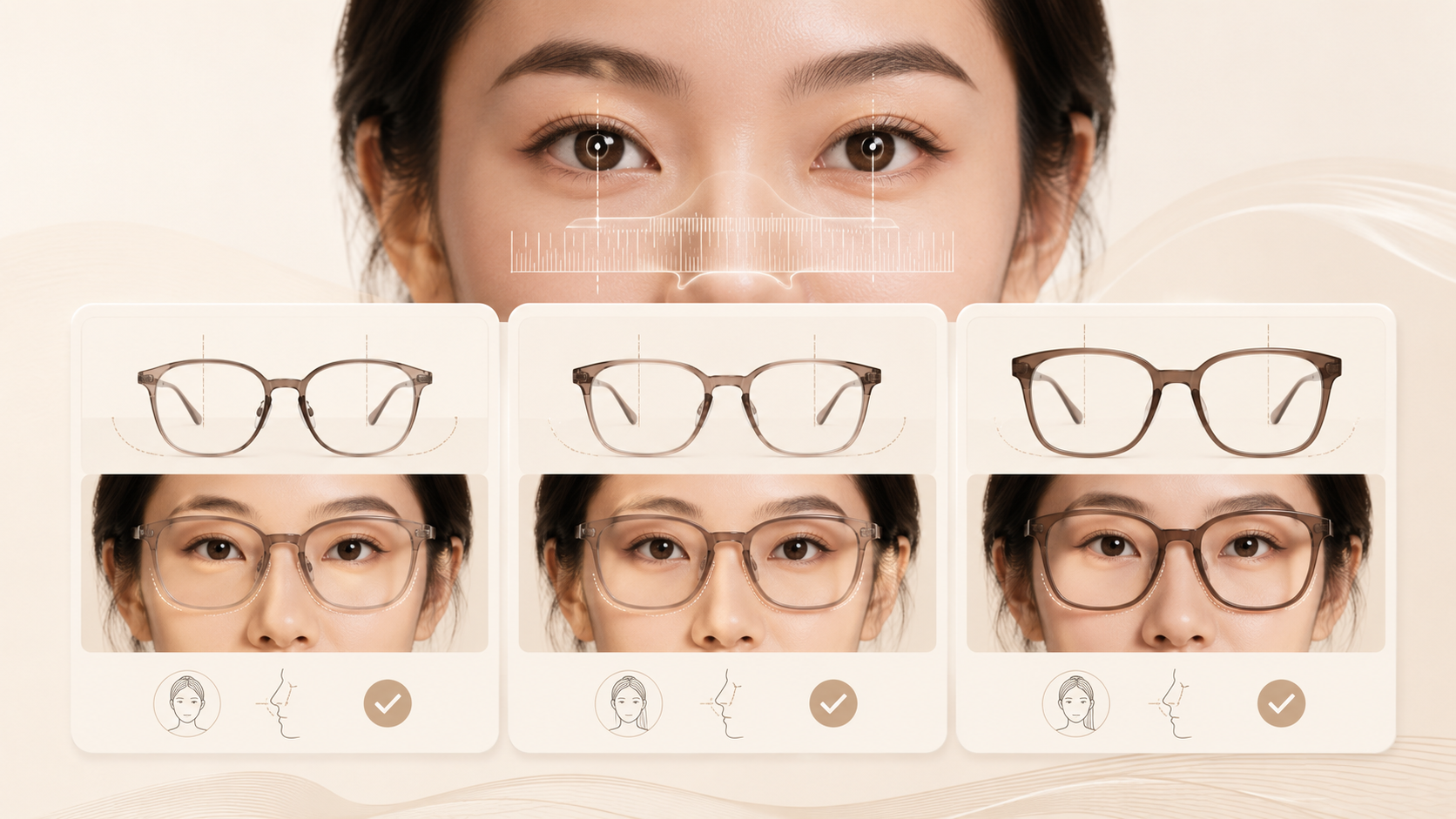
Your PD, or pupillary distance, is the distance between the centers of your pupils. It is mainly used to position lenses correctly, but it can also help guide your frame size choice.
As a simple starting point:
PD 60 or below
Recommended: Small Frame Suggested lens width: 45 mm to 50 mm
60 < PD ≤ 63
Recommended: Medium Frame Suggested lens width: 51 mm to 52 mm
PD > 63
Recommended: Large Frame Suggested lens width: 52 mm to 56 mm
This is not a strict formula, but it is a useful guide if you are shopping online and want a better starting point.
Frame Size and Face Size Are Not Exactly the Same
Many people think they only need to know whether they have a small, medium, or large face.
That helps, but it does not tell the full story.
Two people with a similar face width can still need different glasses because of differences in:
-
nose bridge height
-
cheekbone width
-
temple width
-
eye placement
-
how high or low frames sit on the face
This is why standard sizing can still feel wrong, even when the frame looks right on paper.
Why Bridge Fit Matters So Much
If your glasses always slide down your nose, the problem may not be frame width alone.
It may be the bridge design.
This is especially common for people with:
-
low nose bridges
-
flatter bridges
-
higher cheekbones
-
faces that do not fit standard frame geometry well
That is where low bridge fit glasses or Asian fit glasses can make a big difference.
These frames are often designed with:
-
better nose support
-
a more secure bridge fit
-
improved frame angle
-
less slipping during daily wear
-
more comfort around the cheeks
A better fit is not only about size. It is also about how the frame is built.
A 3-Minute Check Before You Buy Glasses Online
Use this quick process before placing an order.
-
Check your current frame size
If you already own a pair that fits well, use those measurements as your reference.
-
Know your PD
If your prescription includes PD, use it. If not, you can measure it with a ruler or digital tool.
-
Compare lens width
Stay close to the size you already know works, unless you intentionally want a larger or smaller look.
-
Think about how your current glasses feel
Ask yourself:
-
do they slide down?
-
do they press at the temples?
-
do they touch your cheeks?
-
do they feel too narrow?
These answers help you decide whether to size up, size down, or look for a different bridge fit.
-
Consider low bridge fit if standard frames do not stay in place
If this has been a recurring issue, size alone may not solve it.
Common Mistakes When Choosing Frame Size Online
Buying based on style alone
A flattering shape will not fix a poor fit.
Ignoring bridge fit
This is one of the biggest reasons glasses slide down.
Choosing oversized frames without checking measurements
Oversized styles can work, but only if the proportions still suit your face.
Assuming all medium frames fit the same
Sizing varies from brand to brand and design to design.
Skipping the product measurements
Measurements are the most reliable part of online glasses shopping.
How to Choose the Best Frame Size for Low Bridge Fit
If you usually struggle with standard glasses, use this checklist:
-
start with your current frame measurements
-
use PD as a general size guide
-
check whether the bridge design offers better support
-
avoid frames that are too flat or too wide at the bridge
-
look for styles described as low bridge fit or Asian fit
For many people, the right frame is not just a matter of choosing small, medium, or large. It is about choosing a frame that actually matches the way their face is shaped.
Final Thoughts
Choosing the right frame size online does not have to feel complicated.
Once you know your PD, your current frame measurements, and whether you need low bridge support, it becomes much easier to narrow down the right fit.
Start with comfort. Then choose the shape and style you love.
A good pair of glasses should not only look right in product photos. It should feel right from the moment you put it on.
Explore Better-Fitting Frames
If standard glasses tend to slide, sit too low, or feel unstable, it may be time to try frames designed for a more secure fit.
Shop Asian Fit Glasses Browse Low Bridge Fit Frames
FAQ
Does PD determine frame size?
Not exactly. PD helps you estimate a good size range, but frame width, bridge fit, and facial structure also matter.
What if my glasses slide down even when the size seems right?
The bridge design may be the problem. Low bridge fit glasses are often a better solution.
What frame size is considered medium?
For many shoppers, medium frames often fall around 51 mm to 52 mm lens width, depending on the design.
Are Asian fit glasses only for Asian faces?
No. They can work well for anyone with a low nose bridge, higher cheekbones, or a face shape that does not fit standard frames comfortably.
How can I tell if my glasses are too wide?
If they slide often, feel unstable, or extend too far past your face, they may be too wide.