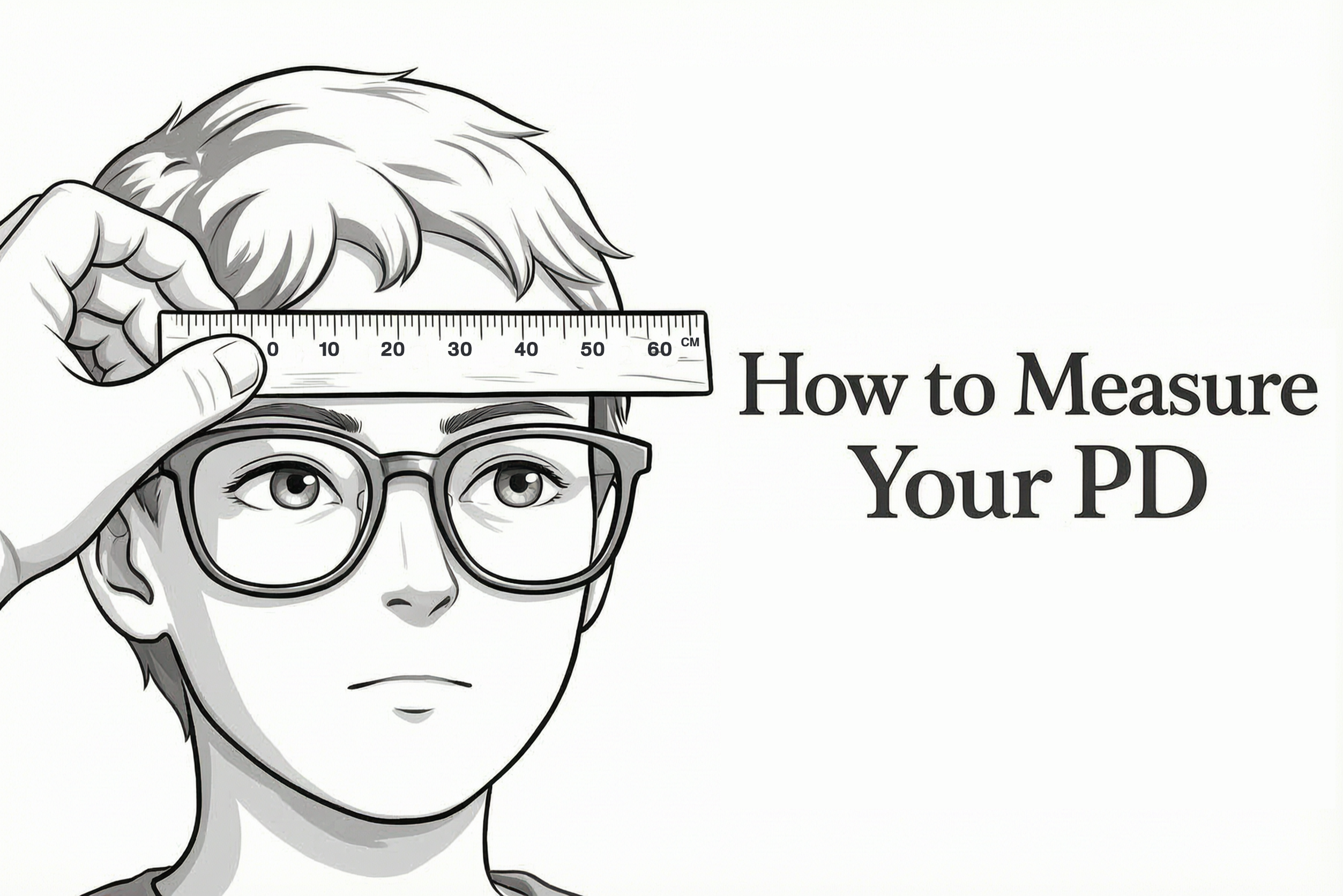
Measuring pupillary distance at home is straightforward, but small setup errors can change the result. This guide focuses on the mistakes that most often cause inconsistent PD measurements and explains how to correct them before ordering glasses.
1. Holding the ruler away from your brow
Keep a millimeter ruler flat and steady against your brow. If the ruler tilts forward or sits at an angle, the apparent distance between your pupils can change. Face the mirror directly and keep your head level throughout the measurement.
2. Moving your head instead of your eyes
Your head should remain still while you switch which eye is open. Moving closer to the mirror, turning your chin, or leaning sideways can shift the reading. Stand roughly 8 inches or 20 centimeters from the mirror and look straight ahead.
3. Confusing single PD and dual PD
Single PD is one total measurement between the centers of both pupils. Dual PD uses two numbers measured from the center of the nose to each pupil. Do not add or split numbers unless the prescription or ordering form specifically asks you to do so. Read our single PD vs. dual PD guide for examples.
4. Trusting one measurement
Repeat the process at least three times. If the readings differ, reset your position and measure again rather than averaging widely different numbers. Consistent results are more useful than a single rushed attempt.
5. Using an average value instead of your own PD
Adult PD often falls within a common range, but an average is not a substitute for your measurement. Accurate lens placement matters for visual comfort, especially with stronger prescriptions or progressive lenses. If you cannot obtain a consistent result, ask an eye-care professional to measure it.
What to do next
For complete step-by-step instructions, use our 3-minute home PD measurement guide or visit the GOODLUUK PD resource page. Once your number is confirmed, browse Asian fit eyeglasses and enter the PD exactly as requested during lens selection.