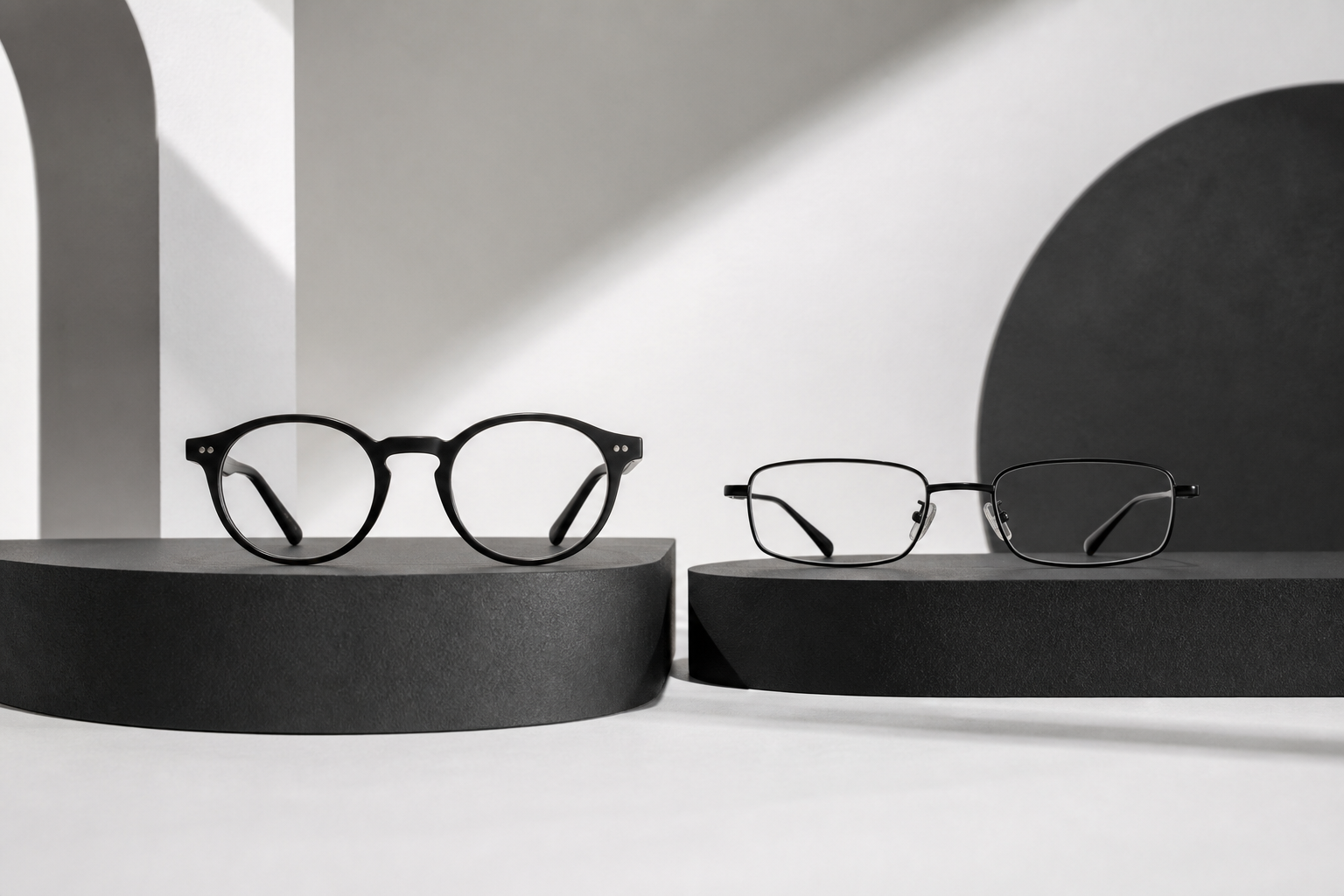
“Small glasses” and “narrow glasses” are often used as if they mean the same thing. They do not. A frame can have narrow lenses but a wider bridge, or small lenses but a surprisingly wide overall front.
Understanding the difference helps you avoid frames that look compact online but still slide, squeeze the temples, or extend beyond your face.
What Are Small Glasses?
Small glasses are frames with compact overall proportions. This may include a shorter total width, smaller lenses, reduced lens height, or a combination of these features. They are often suitable for smaller faces, but the bridge and temples still need to match.
What Are Narrow Glasses?
Narrow glasses mainly describe the total width across the front. They fit faces that need less horizontal space. A narrow frame may still have tall lenses or an oversized visual style.
The Measurements That Matter
Overall frame width
This is the fastest way to judge whether a frame is likely to extend beyond your temples. Compare it with a comfortable pair you already own.
Lens width
The first printed number usually describes one lens. It does not include the full bridge, rims, hinges, or decorative details.
Bridge width
The second number measures the distance between the lenses, but the physical bridge shape can matter just as much. A smaller number does not automatically mean better low bridge support.
Lens height
Lens height influences how large the frame looks and whether the lower rim may touch higher cheekbones.
Temple length
Temple length affects how the arms reach behind your ears. It should be considered after the front width and bridge fit are correct.
Small Face Does Not Always Mean Narrow Bridge
People with similar face widths may have different nose bridges, cheekbone positions, and temple shapes. If frames frequently slide, choose the correct fit system in addition to a compact width.
Learn more in our Asian fit vs standard fit guide.
Which Shapes Work Well?
- Compact ovals for a soft fashion look
- Small rounds for clean, balanced proportions
- Narrow rectangles for a sharper silhouette
- Rimless frames for less visual weight
- Shallow squares for a structured look with reduced lens height
A Simple Comparison Method
- Measure or identify a comfortable existing frame.
- Compare total width first.
- Compare lens height and bridge design.
- Check whether your current glasses slide or touch your cheeks.
- Use those fit problems to decide between standard and Asian fit.
For detailed instructions, read How to Choose the Right Frame Size Online and explore GOODLUUK eyeglasses.
FAQ
Do smaller lens numbers guarantee a smaller frame?
No. Overall width also depends on the bridge, rims, hinges, and frame construction.
Are narrow glasses better for a low nose bridge?
Not automatically. Width and bridge support solve different fit problems.
Can a small face wear wide-looking fashion frames?
Yes, when the actual fit remains secure and the oversized effect is deliberate rather than caused by an incorrect width.