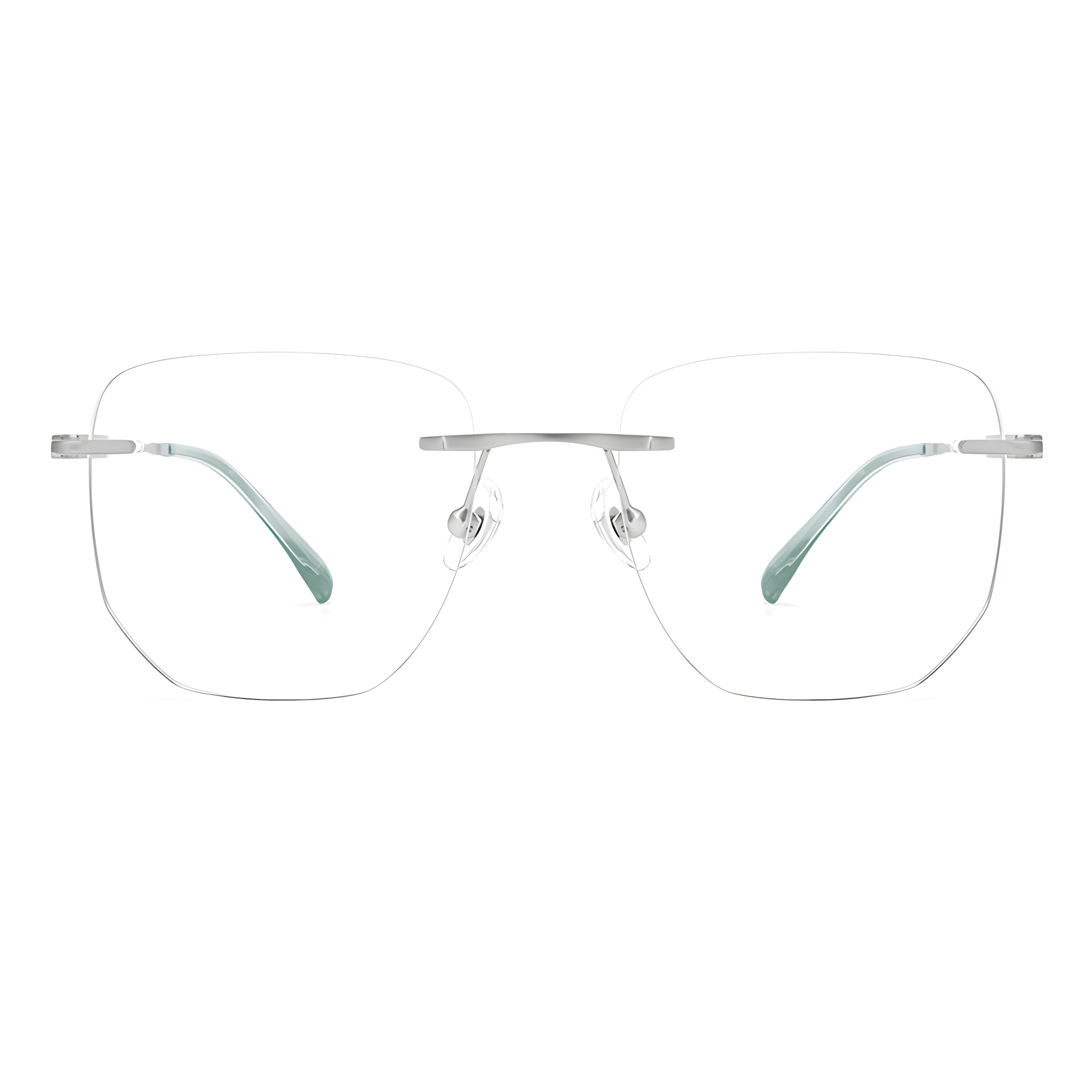
Prescription Asian fit glasses combine low bridge frame geometry with lighter materials and, when needed, high-index lenses. Higher prescriptions add weight and edge thickness that make standard frames slide on a low nose bridge. Choose Asian fit or low bridge frames with adjustable pads first, then pick a lens index that keeps edges thinner—and a titanium frame when you want less weight all day.
Quick answer: Prescription Asian fit glasses combine low bridge frame geometry with lighter materials and, when needed, high-index lenses. Stronger prescriptions add forward weight that worsens slip on a low nose bridge. Fix the sit with Asian / low bridge pads and cheek clearance first, then choose an appropriate lens index (GOODLUUK offers 1.50, 1.60, 1.61, 1.67, and 1.74) and a light titanium front so the stack stays stable.
If you are configuring prescription lenses online and already know your frames slip or rest on your cheeks, this guide is for you. Below you will see why strong Rx makes sliding worse, how to choose Asian / low bridge geometry before you worry about index, a plain-language lens index guide, why titanium helps, and a practical ordering checklist. For fit basics without the Rx deep dive, start with best glasses for a low nose bridge. For label differences, see Asian fit vs standard fit. If sliding is the symptom you feel most, keep why glasses slide down your nose open beside this page.
Why Strong Prescriptions Make Sliding Worse
A low nose bridge already gives standard frames little side contact. Add a higher prescription and two things pile on: lenses get thicker at the edges (especially myopia minus powers in larger eyes), and the front gets heavier. The center of gravity moves forward. Gravity then pulls harder on a bridge that never gripped well—so you push the frames up more often, feel cheek contact sooner, and notice the optical centers drifting below where they belong.
Large lens eye sizes amplify edge thickness for the same Rx. Heavy acetate fashion fronts add their own mass before lenses even go in. Plastic frames with molded saddle bumps plus a strong prescription are a common “looks great in photos, slides by lunch” combination. Front-heavy lenses are one of the reasons listed in our slide guide; they do not invent grip on a mismatched bridge—they punish it.
Think of the front of the glasses as a small seesaw. On a higher bridge, the pads or saddle catch early, so even a heavier Rx stays relatively stable. On a lower bridge, the fulcrum is weaker: the same lens mass travels farther down the nose before anything stops it. That is why two people with identical prescriptions can have completely different slip stories—their frame geometry is different.
Cheek contact often shows up in the same week as sliding. As the front drops, the lower rim meets high cheekbones when you smile or talk. Cleaning oil helps friction, but it cannot move optical centers back up once the bridge has nowhere to sit. Geometry first; maintenance second; index third.
The practical takeaway: treat prescription weight as a stack. Frame geometry + frame material weight + lens index + lens size all matter. Fixing only one layer (for example buying thinner lenses alone) rarely solves chronic slip on a low bridge.
Choose Frame Geometry First (Asian / Low Bridge)
Fit comes before index. Asian fit—also called low bridge, alternative, or universal fit—changes how the frame meets your face: higher or larger nose pads for side contact, bridge geometry that grips a lower bridge, reduced pantoscopic tilt so lenses clear the cheeks, and slightly curved temples that share load. Anyone with those facial features can wear them; the label is about geometry, not ethnicity. Compare the designs in Asian fit vs standard fit.
When you shop, prefer frames labeled Asian fit or low bridge with adjustable pads when available. Read Size / Weight on the product page—strings like 50-21-145 or 52-18-145 mean lens width–bridge–temple in millimeters—and compare total frame width and weight without lenses to a pair that already sits well. Use the GOODLUUK Frame Guide if you are new to those fields.
Do not buy a heavy acetate fashion frame for something like −6.00 on a low bridge without a plan. Molded bumps rarely hold a flatter bridge, and thick plastic plus thick lenses tip forward fast. If you love acetate styling, look for a true low-bridge label or a lighter hybrid front with pads you can tune.
A useful online habit: open two tabs—one product page and the Frame Guide—and write down your reference pair’s lens width, bridge, temple, and total width before you fall in love with a colorway. Style is easy to change later; a bridge that never grips is not. If you still feel stuck between labels, the synonym collections exist so “Asian fit” and “low bridge” shoppers land on the same geometry family.
Soft CTA: browse Asian Fit Glasses and Low Bridge Glasses by fit first, then style.
Lens Index Guide (Plain Language)
Lens index is a material number: higher index bends light more efficiently, so the same prescription can be made thinner and usually lighter. It is not a magic anti-slip coating. On a low bridge, the right index reduces downward pull so a good bridge can do its job.
GOODLUUK lens options historically include indexes 1.50, 1.60, 1.61, 1.67, and 1.74. Confirm the choices shown on each product page when you configure Rx—availability can vary by frame and lens type. As a rough shopping guide (always confirm with your optical partner and the checkout options):
- 1.50 — common baseline for milder prescriptions and smaller lenses; thicker edges appear sooner as power rises.
- 1.60 / 1.61 — everyday step-up for many moderate prescriptions; thinner and lighter than basic plastic for the same Rx.
- 1.67 — frequent choice when prescriptions get stronger or lens eyes are larger; helps keep edges cleaner and weight down.
- 1.74 — ultra-thin end of the range for high prescriptions where edge thickness and front weight are the main worry.
You do not always need the highest index. Matching index to your Rx and lens size matters: a smaller eye size reduces edge thickness for the same power. Pair high-index lenses with true low bridge geometry rather than hoping a thinner lens alone will fix chronic slide. For more comparison detail, see our 1.61 vs 1.67 vs 1.74 lens index guide and how to choose glasses for strong prescriptions.
Progressives and thicker single-vision lenses both benefit from a stable sit: if the frame constantly drops, you spend the day looking through the wrong corridor or the wrong part of a minus lens. That feels like “bad lenses” when the real issue is a front that never matched your bridge. Stabilizing geometry makes whatever index you choose work closer to how it was intended.
We omit add-on prices here because they change with promotions and lens packages—check the live product configurator for current options.
Why Titanium Helps
Titanium (and titanium-mix) fronts stay light before lenses go in, so prescription weight has less “base mass” to tip forward. Many titanium Asian fit styles also use adjustable pad arms you can fine-tune for side contact. Titanium is also a strong hypoallergenic option for all-day wear when nickel sensitivity is a concern.
Published GOODLUUK Size / Weight examples (frame only, without lenses):
- ALMATY — Size 50-21-145, frame width 146 mm, weight 11.2 g, TR + titanium, Asian fit
- SINGAPORE — Size 53-18-145, frame width 141 mm, weight 9.6 g, aluminum-magnesium + titanium, Asian fit
- HANOI — Size 49-20-145, frame width 139 mm, weight 10.4 g, titanium, Asian fit
Those fronts sit in a light ~9.6–11.2 g range without lenses—helpful headroom once prescription lenses are added. Exact nose-pad height in millimeters is rarely published as a single industry standard; use the Asian / low bridge label, adjustable pads when available, and the published size string plus total width instead of inventing pad heights from photos. More material context: titanium glasses for low bridges.
Ordering Prescription Asian Fit Online
Work in this order when you configure a pair:
- Pick Asian / low bridge geometry — confirm the fit label, pads, and Size / Weight against a reference pair. Start in Asian Fit Glasses or Low Bridge Glasses.
- Enter an accurate PD — pupillary distance centers the lenses. Small PD errors cause strain and make you look through the wrong part of a strong Rx. Measure carefully or get it from your optician; see what PD is and why it matters.
- Choose lens index for your Rx and eye size — step up when edges or weight would otherwise dominate; confirm available indexes on the product page.
- Prefer light titanium or titanium-mix fronts when the prescription is already heavy.
- Review returns and lens policy on the product and policy pages before you checkout—fit and Rx online orders deserve a clear backup plan.
Single-vision and many progressive prescriptions can go into Asian / low bridge frames; confirm progressive or specialty options on the specific product page. We do not claim FSA/HSA eligibility here—check your card rules and the store’s current payment messaging if that matters for your purchase.
FAQs
Can I get prescription lenses in Asian fit glasses?
Yes. Asian / low bridge frames take standard single-vision and many progressive prescriptions; confirm lens options on the product page before you order.
Do high-index lenses help glasses stay up?
They reduce thickness and weight, which lowers downward pull—especially helpful with a low nose bridge—but frame fit still matters most. Pair the right index with true Asian / low bridge geometry.
What frame material is best for strong prescriptions?
Lightweight titanium with adjustable nose pads is a strong default for low bridges and higher Rx, because the front starts light and the pads can be tuned for side grip.
Will thick lenses make Asian fit glasses slide?
They can if the frame is heavy or the bridge does not grip; pair high-index lenses with a true low bridge fit and a light front so thickness does not undo the geometry.
What PD do I need for online prescription glasses?
Your pupillary distance (PD) centers the lenses; measure carefully or get it from your optician—small PD errors cause strain, especially with stronger prescriptions. Read what PD is and why it matters.
Ready to configure prescription Asian fit? Shop Asian Fit Glasses and Low Bridge Glasses, confirm measurements with the Frame Guide, then match lens index to your Rx. Keep the low nose bridge fit guide, Asian fit vs standard fit, and the slide-fix guide handy while you compare.